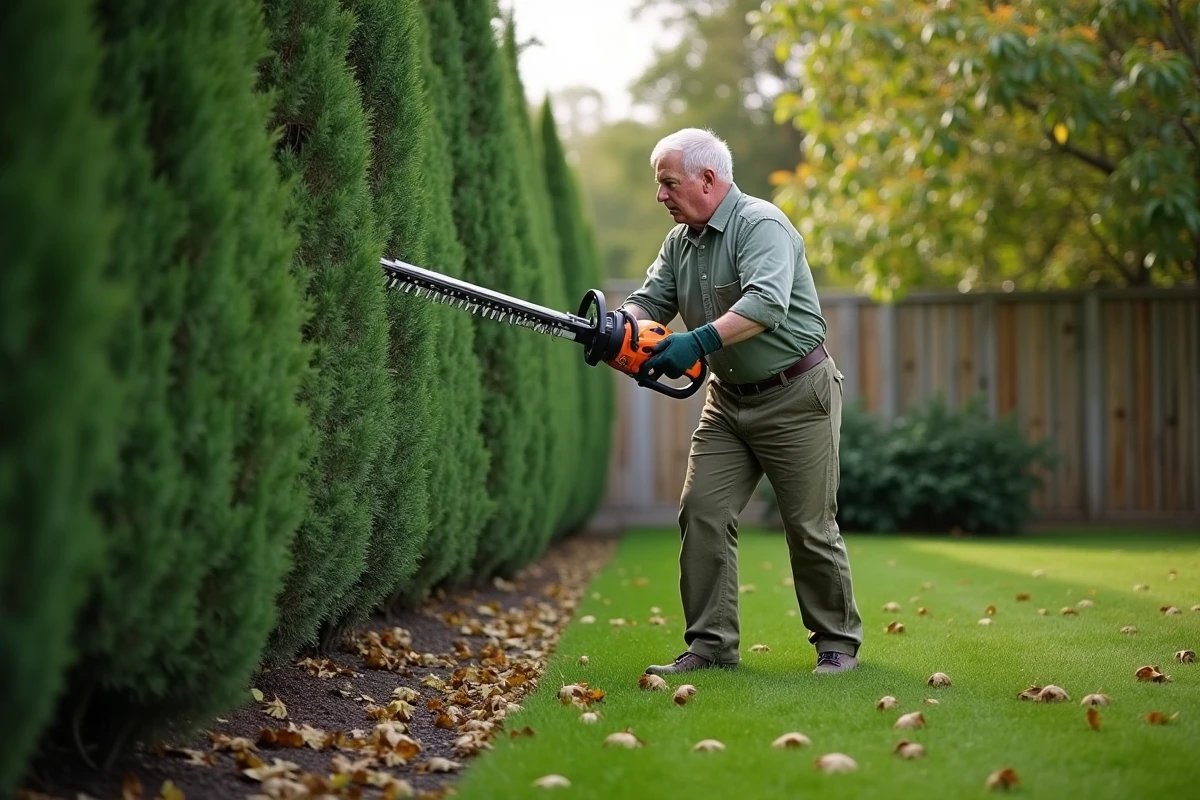
Between a shared battery model and a high-powered gas model, the telescopic hedge trimmer is chosen based on measurable criteria: blade length, cutting capacity, weight in use, and actual noise level. Comparing these data helps avoid a poorly calibrated purchase for the height and thickness of your hedges.
Telescopic Hedge Trimmer: Comparative Table of Decisive Technical Criteria
Most guides merely list models. Before looking at a brand, it is essential to establish the parameters that differentiate a suitable device from one that is undersized or unnecessarily heavy.
| Criterion | Battery (18-36 V) | Gas | Wired Electric |
|---|---|---|---|
| Average weight in use | Moderate to high (battery included) | The highest | The lightest |
| Noise level | Low to moderate | High | Moderate |
| Runtime | Limited by battery | Long (tank) | Unlimited (mains) |
| Capacity for cutting thick branches | Average | High | Average |
| Engine maintenance | Almost none (brushless) | Regular (filter, spark plug) | Minimal |
The tipping point between battery and gas lies in the cutting capacity and necessary runtime. For a hedge of thuja or laurel exceeding two meters, gas remains relevant. For mixed hedges of medium height, the battery covers most needs with significantly superior sound comfort.
Several detailed sheets and comparisons by motorization are gathered on taille-haie-telescopique.com, making it easier to sort according to the type of hedge to maintain.
Brushless Motor and Shared Battery: Two Game-Changing Parameters
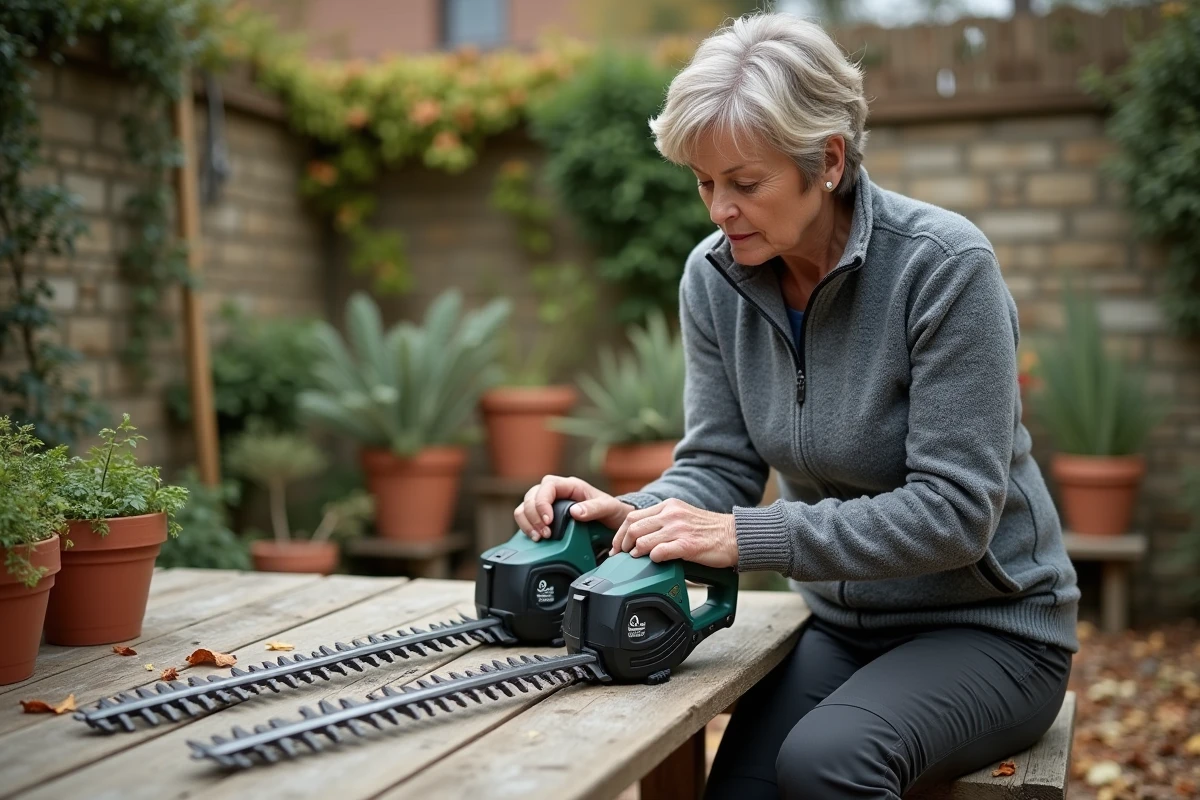
For several seasons now, brushless motors (without carbon) have become widespread on battery-operated telescopic models. Field feedback indicates less vibration transmitted to the arms, superior runtime per charge, and a longer lifespan of the motor block compared to traditional carbon motors.
The difference in vibrations is not negligible. On a telescopic tool used with arms raised for twenty to thirty minutes, every reduction in vibration decreases muscle fatigue and improves cutting precision at the top of the hedge.
Shared 18 V or 36 V Battery Systems Between Garden Tools
Gardeners equipped for several seasons increasingly favor “battery system” ranges compatible with other tools (blower, mower, pruning chainsaw). The initial investment in a battery-charger pack pays off with the purchase of a second tool sold without a battery or charger.
Before choosing a telescopic hedge trimmer, check the manufacturer’s battery platform and the number of compatible tools. A high-performing model but isolated on a proprietary battery format will cost more in the long run.
Actual Noise Level in Situations: An Underestimated Criterion in Residential Areas
The decibel figure displayed on the technical sheet is measured in a laboratory. The actual noise level in situations can vary significantly depending on the thickness of the branches being cut, the blade speed, and the reverberation between walls or fences in a housing development.
Several municipalities are tightening noise control regulations, and professional gardeners report needing to adjust their trimming schedules to comply with municipal orders. For use in urban or housing estate gardens, a battery model with a brushless motor generally stays well below the problematic threshold. In contrast, a gas model used early in the morning may trigger complaints.
Blade Length and Tooth Spacing: Adapting the Tool to the Hedge
The blade length determines the cutting width in a single pass. A short blade offers more maneuverability for rounded shapes or topiaries. A long blade speeds up the trimming of straight hedges over long lengths.
- Short blade (less than 45 cm): ideal for narrow hedges, sculpted shapes, and finishing touches at the top of the hedge where precision matters more than speed.
- Medium blade (45 to 55 cm): versatile, suitable for the majority of residential hedges of thuja, laurel, or privet.
- Long blade (more than 55 cm): reserved for large country hedges or straight plant fences, where the time saved per pass compensates for the extra weight.
The spacing of the teeth determines the maximum diameter of branches that can be cut cleanly. A wide spacing accommodates thicker twigs but leaves a less clean result on fine shoots. A tooth spacing suited to the average thickness of the twigs in your hedge avoids jams and preserves cutting quality.

Cutting Waste Recovery: The Emerging Functionality to Watch
Several models tested in 2025-2026 now integrate a cutting waste recovery or suction system directly on the cutting head. The benefits are twofold: visibility during cutting remains clear, and the cleaning time on the ground after trimming decreases significantly.
This feature is still rare in consumer ranges. It deserves attention when renewing a device, especially for hedges with evergreen foliage that produce a significant volume of waste with each pass.
Weight and Balance: What Product Sheets Don’t Show
The total weight in working order (charged battery or full tank) does not tell the whole story. The distribution of this weight between the cutting head and the main handle determines the fatigue felt. A well-balanced device with its center of gravity close to the hands will be more pleasant than a lighter model that is front-heavy.
- Test the tool with arms raised for a minute before purchase if possible.
- Check for the presence of a harness or shoulder strap provided, especially for loads over four kilograms.
- Rotating or adjustable handles reduce wrist twisting during high lateral cuts.
The choice of a telescopic hedge trimmer ultimately depends on the compatibility between the motorization, the blade, and the type of hedge to maintain. A brushless model with a shared battery covers most residential gardens. For very tall or very thick hedges, gas retains an advantage in runtime and cutting power, at the cost of noise and engine maintenance.