A hybrid remote worker changes their workplace two or three times a week. Their desk is sometimes a kitchen table, sometimes a coworking space, and sometimes a noisy café. Classic health advice (preparing meals the night before, walking for 30 minutes at a fixed time, sleeping in a perfectly darkened room) assumes a stable environment. Improving daily well-being requires a different approach when daily life itself is constantly shifting.
Well-being of Nomadic Workers: Adapting Health Routines to an Unstable Environment
We are not talking about digital nomads settled in Bali, but more common profiles: consultants on assignment, field salespeople, remote workers alternating between home and office. The common point is the lack of fixed reference points to structure health habits.
The first useful reflex is to anchor a micro-routine to a portable action, meaning an action that does not depend on location or equipment. A few standing stretches between two meetings, a four-part breath before opening the computer. Regardless of the location, the trigger remains the same.
To source reliable health advice tailored to this type of constraint, one can consult optisante.fr, which gathers verified information on health and daily well-being.
A common mistake is trying to replicate a home routine in a mobile context. If there is no kitchen on Tuesday, planning a portable meal the night before is better than skipping lunch. If the hotel lacks a gym, a brisk twenty-minute walk outdoors serves the same purpose for daily physical activity.

Physical Activity Without a Gym: Intuitive Walking as an Anti-Stress Lever
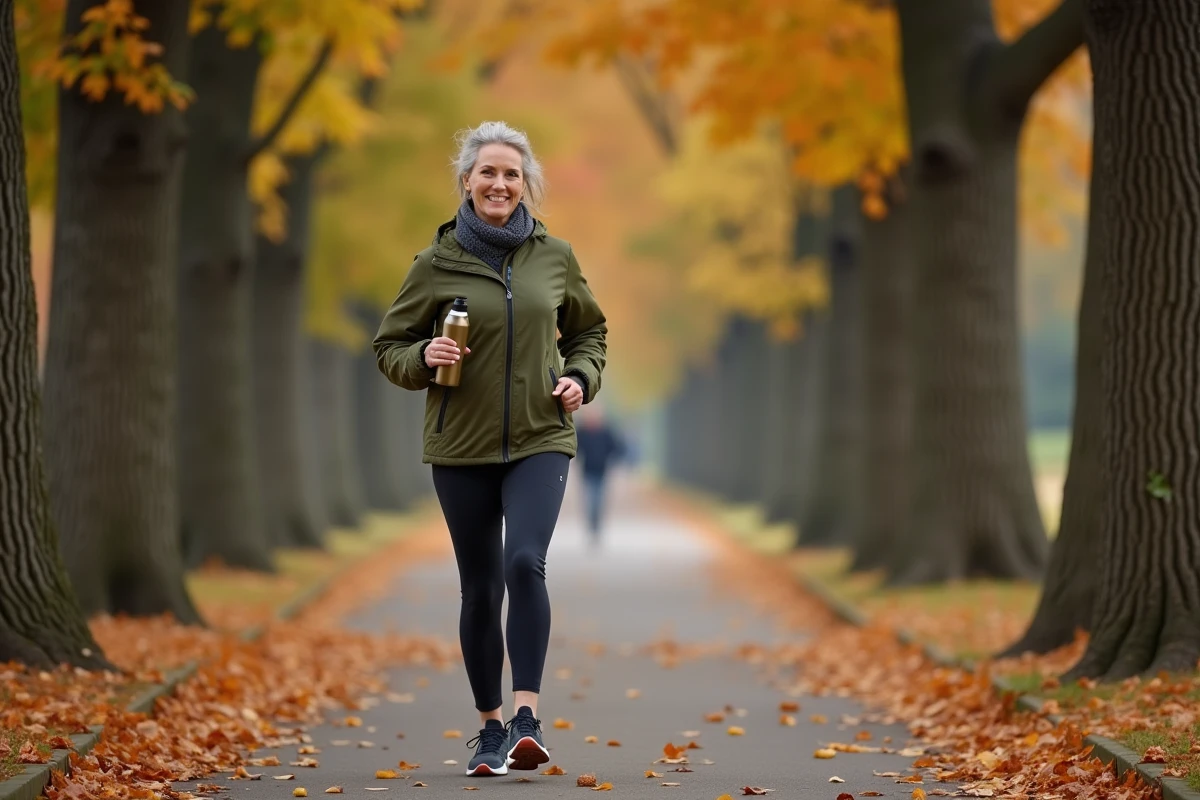
INSERM published a study in January 2026 titled “Active Mobility and Mental Health,” which observes a marked decrease in burnout among employees practicing what is called intuitive walking in urban environments. The principle is simple: walk without a predetermined route, letting oneself be guided by desire, for at least fifteen minutes.
Intuitive walking combines physical activity and stress regulation without requiring equipment or a dedicated time slot. It can be practiced between two appointments, on the commute from home to office, or during lunch breaks.
What distinguishes it from a simple stroll is the intention of attention paid to the environment: observing facades, listening to sounds, varying streets. This sensory dimension affects mental load, a recurring issue for hybrid workers who spend their day in front of a screen.
Integrating Walking into a Fragmented Schedule
Blocking off thirty consecutive minutes is often unrealistic. Two blocks of fifteen minutes work just as well. One can place one in the morning before the first connection, and the other at the end of the day.
Feedback varies on this point: some prefer a single long outing, while others prefer to break it up more. The issue is not the total duration but the regularity throughout the week.
Nutrition and Sleep in a Mobile Context: Key Trade-offs
When changing locations regularly, two pillars of well-being become harder to stabilize: nutrition and sleep. Here are the concrete trade-offs that make a difference:
- Prepare two or three portable meal options per week (jar salads, wraps, dried fruits) rather than aiming for five perfect homemade meals that won’t withstand unforeseen events
- Carry a sleep mask and earplugs in your bag, regardless of the sleeping location, to maintain stable sleep quality despite environmental changes
- Set a consistent last screen time each evening (even on weekends) as a circadian anchor, more reliable than a fixed bedtime when evenings vary
- Limit alcohol consumption on travel nights, a time when social temptation is stronger and sleep is already disrupted by changing beds
Regarding nutrition, the classic trap for mobile workers is the default daily sandwich. Varying protein sources and integrating a vegetable into each meal remains feasible even at restaurants, provided you choose the dish before getting hungry.
Mental Health and Isolation: An Underestimated Angle
Hybrid remote work generates a form of intermittent isolation. One is never completely alone (there are video conferences), but lacks regular physical contact. Mental health often suffers silently as a result.
A simple action: plan one in-person exchange per week with a colleague or a close friend. Not a work meeting, but a real social moment. Tuesday morning coffee with a freelance friend, Thursday lunch with a colleague. This fixed appointment compensates for the fragmentation of social ties.
Reliable Health Advice: How to Sort Wellness Information Sources
When seeking to improve well-being, the challenge is not finding advice but distinguishing reliable information from ambient noise. Social media is full of unfounded recommendations, often presented as absolute truths.
Here are some guidelines to assess the reliability of health advice:
- Check if the source cites a recognized institution (WHO, INSERM, EFSA) or a study published in a peer-reviewed journal
- Beware of promises of rapid or spectacular results, which almost always fall under marketing
- Favor recommendations that acknowledge limitations or individual variations, a sign of a serious approach
The Lancet Public Health published a meta-analysis in April 2026 comparing Nordic wellness routines (including controlled cold exposure) to Mediterranean approaches. The former show better resilience to seasonal stress. This type of comparative, sourced, and nuanced data is worth more than generic advice on stress management.
Adapting daily health habits does not require changing everything at once. For a hybrid worker, the most noticeable gain often comes from a single adjustment maintained over several weeks: regular walking, a prepared meal, a fixed social appointment. The rest will follow.