Contrary to popular belief, not all paints adhere to air-dry clay, even after complete drying. Some common chemical formulations can cause unexpected cracks or peeling.
The growing popularity of this material raises technical questions that are rarely addressed, particularly regarding the compatibility of primers and finishes. Errors in choice or application can compromise the strength, shine, or durability of creations.
Air-dry clay: what you need to know before getting started
Molded without firing, air-dry clay attracts many creative hobbyists due to its ease of use. Made from cellulose and minerals, it stands out as an accessible alternative to traditional clay and allows for simple drying at room temperature. No need for an oven: it becomes possible to create original decorative objects, even without prior experience. However, to achieve results that meet your expectations, it is essential to understand the specifics of this material.
Air-dry clay lends itself to all desires. Whether working with fingers or precise tools, its malleable texture allows for an infinite variety of shapes, from subtle jewelry to more ambitious decorative pieces. A drying time of 24 to 48 hours should be expected, varying according to the thickness of the model and the ambient humidity. Every detail matters: smoothing, refining, and sanding with fine-grit sandpaper helps achieve a flawless surface, ready for decoration.
One condition must be met before moving on to color: complete drying, without compromise. Well-dried clay maximizes the adhesion and retention of pigments. To ensure reliable results, select a paint suitable for air-dry clay: it ensures longevity, shine, and color resistance, as presented in ‘Techniques de peinture sur argile sans cuisson : astuces et conseils – Atypik Home’. Carefully dust the surface, then let your creativity flow, taking the necessary time at each step.
Which paints and finishes to choose for vibrant creations?
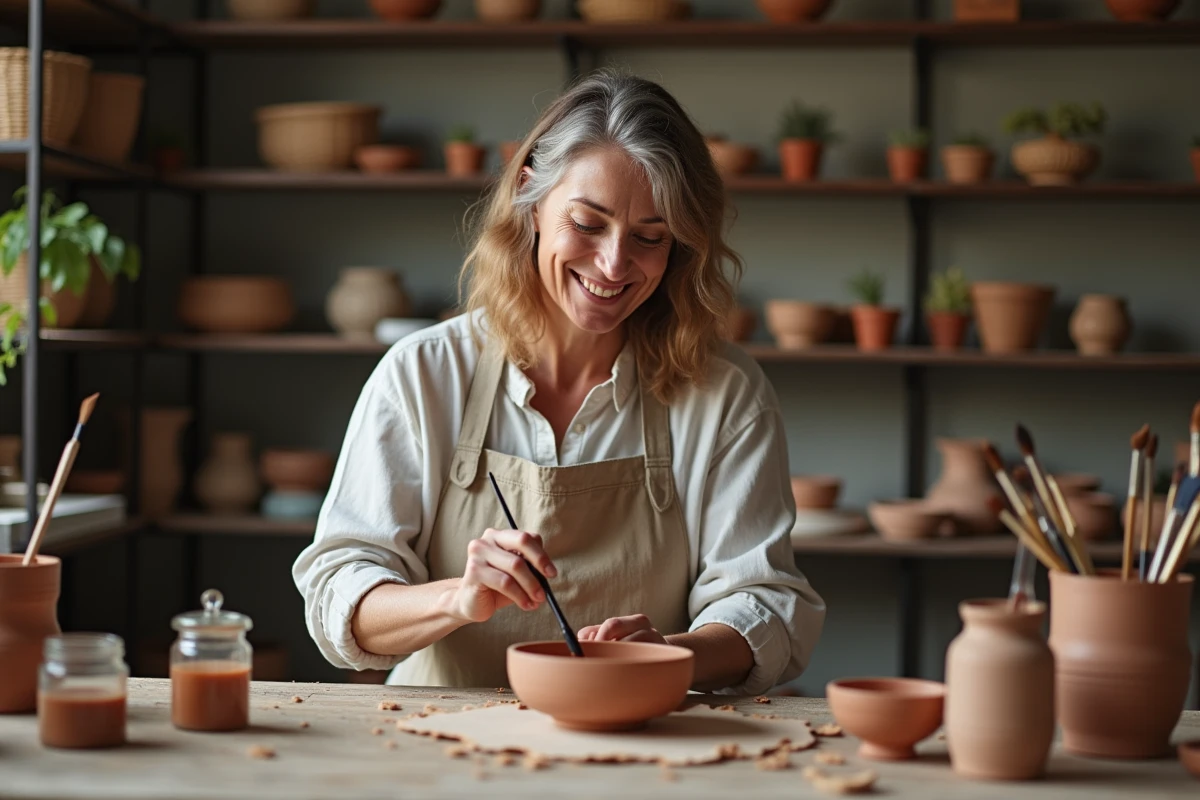
The choice of appropriate paint determines the success of a decoration on air-dry clay. Acrylic paint stands out for its coverage, the strength of its pigments, and its great adaptability. It adheres to the dry material without cracking or dulling over time. Work in thin layers, ensuring each application dries well. This method respects the most subtle details and guarantees lasting results.
For jewelry or decorative objects that are frequently handled, adding a protective varnish makes perfect sense. Depending on the desired finish, several options are available: matte varnish offers a natural and understated look, satin varnish adds a slightly shiny touch, while glossy varnish intensifies the light. Acrylic varnishes, odorless and fast-drying, effectively protect against moisture and dust. For particularly exposed objects, marine varnish is suitable for demanding conditions.
Here are the main options to remember for your creations to stand the test of time:
- Acrylic paint: ideal for bright colors and precise patterns.
- Acrylic varnish: it protects the surface while enhancing the intensity of the colors.
- Marine varnish: recommended for objects exposed to moisture or frequent handling.
A smooth and clean surface remains the basic condition: sanding directly influences adhesion and the final appearance. Wait between each step: paint and then varnish must dry completely to avoid any marks or alterations. This attention to detail prolongs the shine of your creations while respecting your initial project.

Easy techniques and tips to enhance your clay objects
Air-dry clay stimulates inspiration, but it is the attention given to the finish that makes the difference. Before moving on to color, the surface deserves your full attention. Equip yourself with fine-grit sandpaper: gentle sanding promotes the adhesion of paints and varnishes. For the most precise creations, do not hesitate to use small tools or soft fabrics to perfect the result without scratching the material.
To add personality to your pieces, several techniques stand out. Imprints allow for creating relief: press plants, lace, or stamps onto the still-wet clay. After drying, these textures come to life once painted. Masking techniques, using adhesive tape or handmade stencils, offer clean and personalized patterns, perfect for unique decorative objects, regardless of your level in creative hobbies.
To make the most of your decorations, here are some practical tips:
- Use acrylic paint in thin layers to avoid a pasty effect.
- Test gradients by slightly moistening the surface: the blending of colors brings life to the whole.
- Ensure complete drying at room temperature before applying a protective varnish that will prolong the beauty of your objects.
Beginners will benefit from simple projects: try making medallions, keychains, or small sculptures to get the hang of it. Air-dry clay lends itself to all desires: inlays, engravings, color layering… Each addition gives depth and character to your works. The possibilities extend far beyond the initial idea, and each attempt paves the way for a new discovery. The next object in your hands could very well become the centerpiece of your decor.